
 English
 Русский
 Español
 简体中文
 العربية
 Français
 Bahasa Indonesia
 한국어
 Português
 Deutsch
 日本語
 हिंदी
 Türkçe
 Tiếng Việt
 Italiano
 ไทย
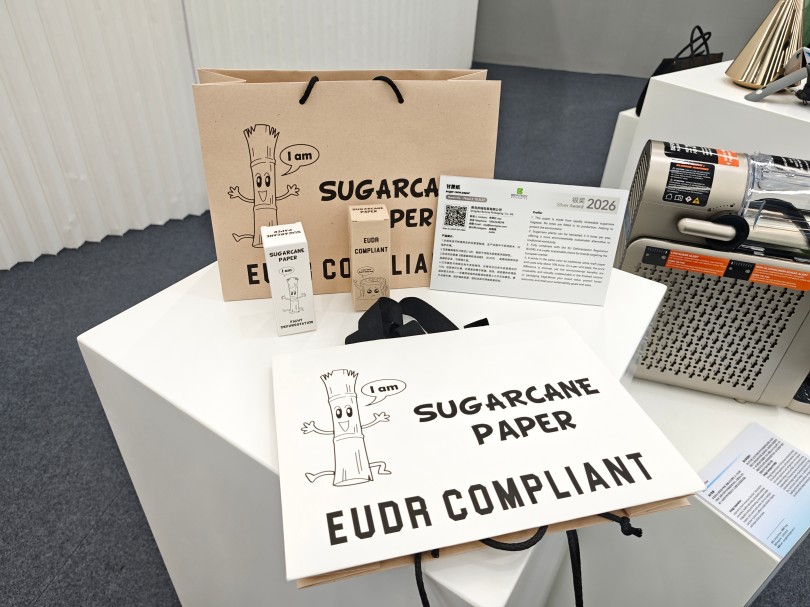
Bonroy sugarcane paper bags and cartons displayed with the 2026 Silver Award panel.
A Silver Award for a New Packaging Material
Qingdao Bonroy Packaging Co., Ltd. is celebrating a Silver Award for its sugarcane paper at the 2026 Canton Fair Design Award. The product display brings together natural-toned and white packaging samples alongside a presentation panel identifying the product and its award. For Bonroy, the recognition creates an opportunity to introduce sugarcane paper to brands looking more closely at the materials behind their packaging.
The exhibition presents the material in familiar formats: shopping bags, folding cartons and unfolded carton samples. Rather than showing paper only as a flat sheet, the display connects the material with finished packaging forms. Visitors can see how color, printed graphics, folds and handles contribute to the overall appearance of a packaging concept.
From Sugarcane Bagasse to Paper Packaging
According to the product information displayed at the exhibition, Bonroy’s sugarcane paper is made using sugarcane bagasse. Bagasse is the fibrous residue that remains after juice is extracted from sugarcane. Its use in paper introduces an agricultural processing by-product into the discussion about packaging fibers and offers a different starting point from conventional wood-based paper.
For a brand team, that starting point can become part of a clearer material story. It encourages questions about where the fiber comes from, how the paper is specified and how the selected material fits the intended pack. These questions are useful at the beginning of a project, when decisions about appearance, structure and material sourcing can still be considered together.
The exhibition samples illustrate this approach through recognizable packaging shapes. They provide a visual introduction to the material, while detailed decisions about paper grade, composition and suitability should be based on the specifications of the individual packaging project.
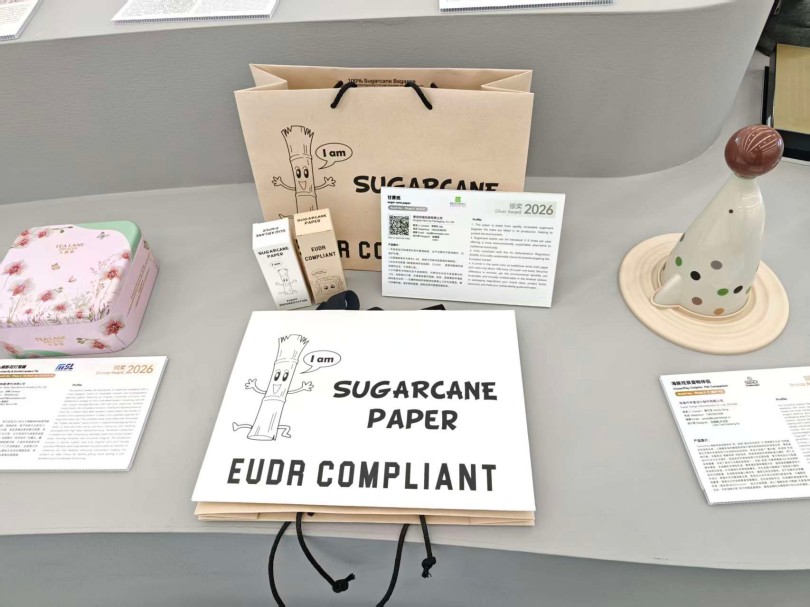
Natural-toned and white carton samples show the material in different packaging forms.
Two Color Directions, Different Brand Expressions
The natural-toned bag shown in the display has a warm, understated appearance. Its dark printed graphics stand out against the paper surface, making the material and the illustration part of the same visual message. For brands considering an earthy or restrained presentation, the sample offers a useful reference for how a packaging concept might communicate through a limited color palette.
The white bag and carton samples explore a different direction. Their lighter background gives the printed graphics a cleaner visual setting and shows that the product presentation is not limited to a single natural-paper look. Seen together, the samples invite a discussion about how color, graphic contrast and material choice can support different brand identities.
These are design possibilities demonstrated by the samples, rather than a promise of identical results across every artwork or production process. Physical print samples remain valuable when selecting colors, reviewing fine details and deciding how the final pack should look.
Paper Bags and Folding Cartons in One Display
The combination of bags and cartons is an important part of the presentation. A bag introduces the relationship between the paper surface, the carrying format and the handle design. A carton adds folds, panels and an opening sequence. Showing both formats makes it easier to discuss a coordinated packaging concept across different customer touchpoints.
The unfolded carton samples also make the construction visible. They help move a conversation beyond the front-facing graphic and toward the way a package is assembled. For a development team, this is a useful reminder that a material choice becomes meaningful through its interaction with structure, printing and the product it is intended to contain.
Possible directions for discussion include retail carry bags, presentation cartons and coordinated secondary packaging. The appropriate format will depend on the product, its dimensions, its weight and the way it is handled. The exhibition provides an introduction to those conversations; it does not replace project-specific sampling or performance evaluation.
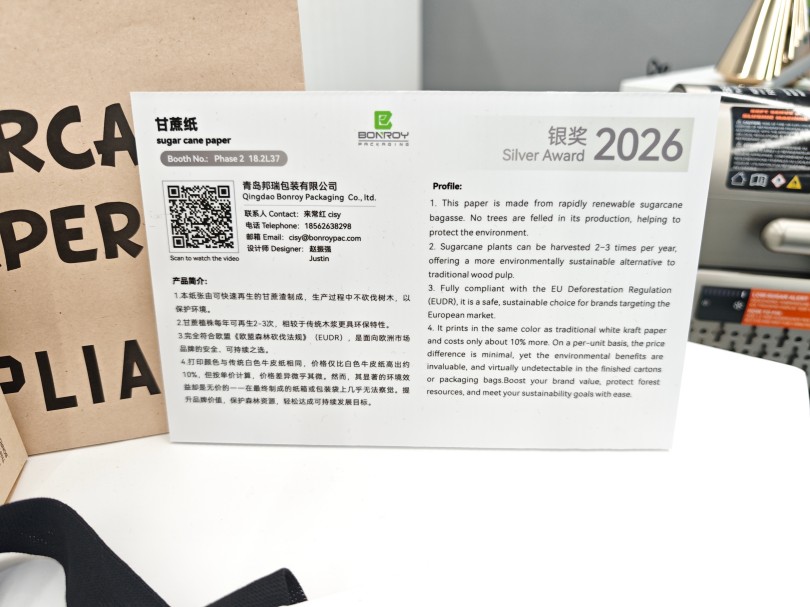
The exhibition panel identifies Bonroy Packaging’s sugarcane paper as a 2026 Silver Award product.
Bringing the Material Story into the Exhibition Space
The photographs place Bonroy’s sugarcane paper within the Canton Fair Design Award exhibition environment. Wide views establish the setting, while closer images bring the bags, cartons and Silver Award panel into focus. Together, they tell a straightforward story: a packaging material, a group of applications and recognition within a design-focused exhibition.
The product panel is particularly useful because it connects the company name, the sugarcane paper product and the 2026 Silver Award in a single view. The packaging samples then add the visual detail that a panel alone cannot provide. They allow readers to see the forms and printed treatments that accompany the award announcement.
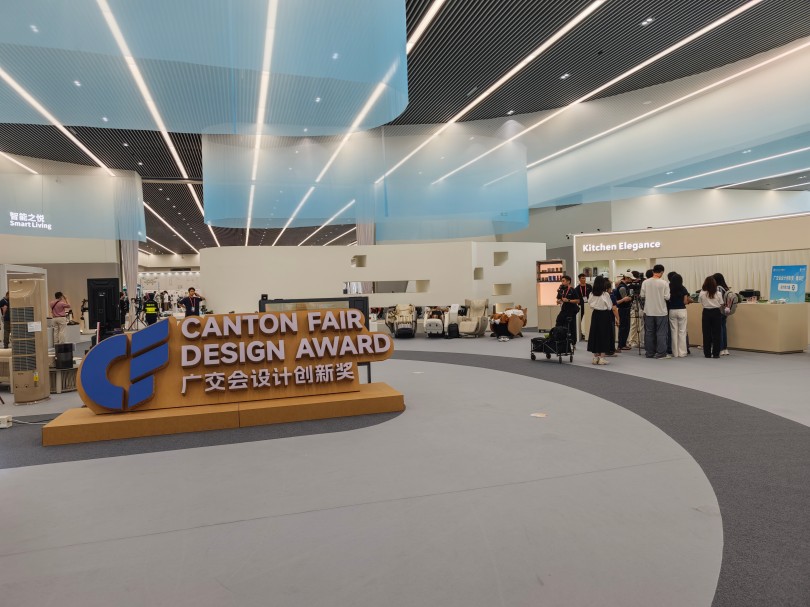
The Canton Fair Design Award exhibition setting provides the context for the product display.
What Brands Can Explore in a Packaging Project
For brands interested in sugarcane paper, the next step is to translate the material interest into a clear packaging brief. Useful starting information includes the product dimensions and weight, the required packaging format, the desired appearance and the expected order quantity. Reference artwork or an existing pack can also help define what a new concept needs to achieve.
A sample review can then focus on the details that matter to the project: paper feel, print appearance, folding behavior, handle selection and the assembled structure. Requirements related to transport, storage or a particular product category should be identified early so that the relevant specifications and testing can be discussed before production decisions are made.
This practical approach keeps the material story connected to the packaging task. It also gives purchasing, design and production teams a shared basis for comparing options, rather than relying on appearance alone.
Explore Sugarcane Paper Packaging with Bonroy
The 2026 Silver Award adds a new milestone to Bonroy Packaging’s presentation of sugarcane paper. More importantly for prospective customers, the displayed samples provide a concrete starting point for discussing what the material could look like in a brand’s own packaging concept.
Bonroy welcomes inquiries from brands, packaging buyers and design teams interested in learning more about the displayed sugarcane paper samples. To begin a discussion, share your packaging format, dimensions, artwork direction and quantity requirements. Contact Bonroy Packaging to explore samples and the next steps for your packaging project.
Explore sugarcane paper packaging
Share your packaging brief and discuss sample options.

