
 English
 Русский
 Español
 简体中文
 العربية
 Français
 Bahasa Indonesia
 한국어
 Português
 Deutsch
 日本語
 हिंदी
 Türkçe
 Tiếng Việt
 Italiano
 ไทย
PACKAGING INSIGHTS | FOOD & BAKERY
Better food packaging starts with a better brief
Food packaging has several jobs to do at once: protect the product, work reliably through packing and delivery, communicate the brand and suit the intended market. A paper-based appearance alone cannot answer all of these needs. The strongest starting point is a clear specification built around the actual food and its journey to the customer.
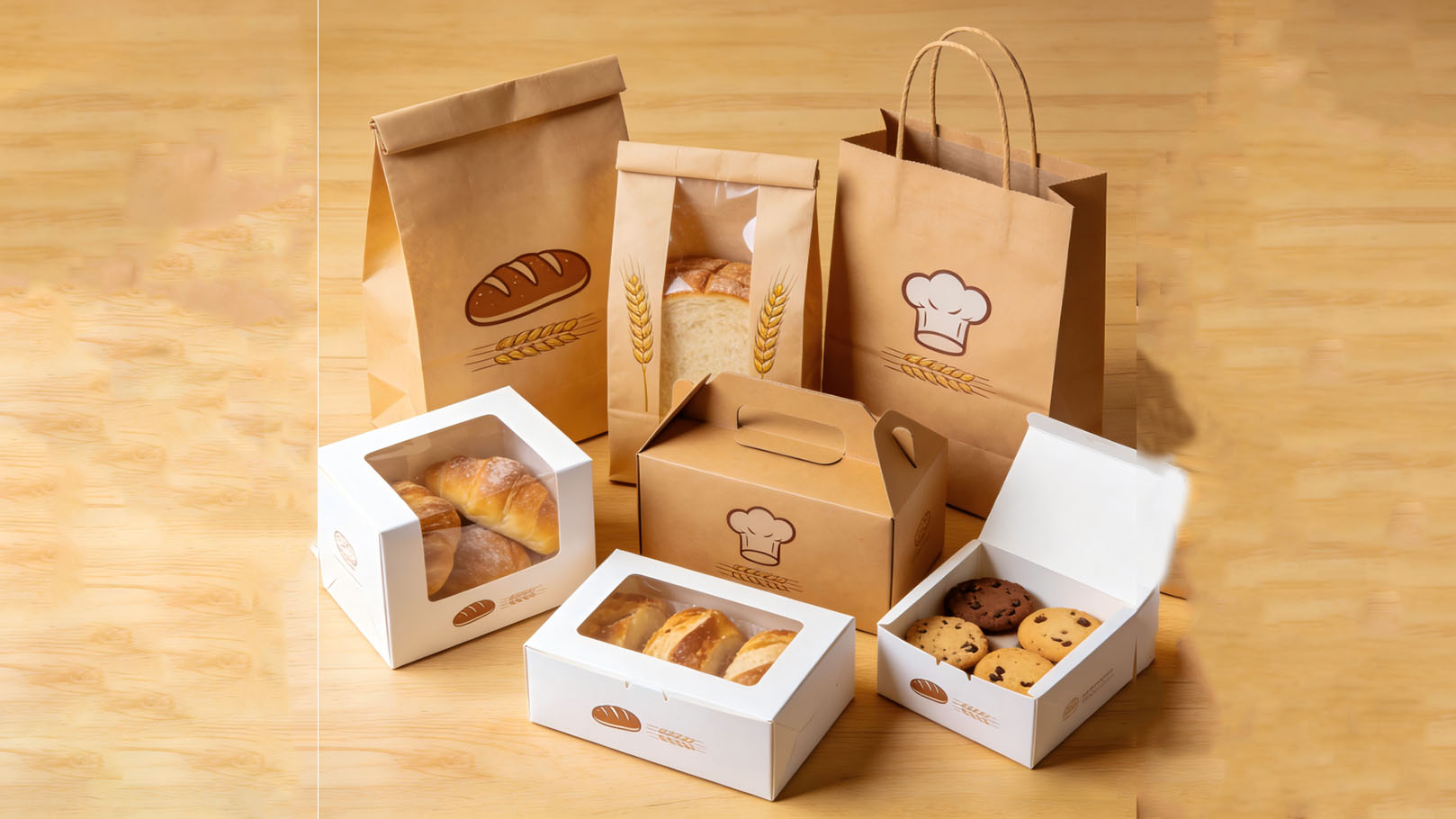
Bakery packaging formats combine product visibility, carry convenience and presentation. Material suitability must be checked for the intended food and contact conditions.
1. Define protection before choosing a finish
Start with product dimensions, weight, fragility and the expected shelf life. Then identify exposure to grease, moisture, light, heat and repeated handling. A box for a delicate pastry has different priorities from a carrier for individually wrapped snacks.
Clarify whether the paper pack touches the food directly or holds a separate inner pack. Specify contact time, temperature and the destination market so that the material review and supporting documentation address the intended use.
2. Match the format to the application
| Application | Design priorities | Check on samples |
|---|---|---|
| Bakery & pastries | Crush protection, fit and visibility | Product movement, closure and stacking |
| Takeaway & carry bags | Carry comfort and structural strength | Loaded handles, base support and moisture exposure |
| Gift-food sets | Product separation and presentation | Insert fit, transport protection and opening sequence |
3. Reduce materials without losing performance
Review the dimensions, paper weight, inserts and empty space before adding more components. A closer fit can make a pack easier to store and ship, but any material reduction needs to be checked against the required protection.
Assess the complete construction, including coatings, adhesives, window films and handles. Recycling suitability depends on that construction and the collection and processing systems in the target market. Use specific, supportable environmental statements rather than broad claims such as “green” or “eco-friendly”.
4. Make the brand easy to recognise
Give priority to a readable product name, clear category cues and a consistent colour system. Check the design at shelf distance and as a small e-commerce image. Premium finishes should support the brand without obscuring essential information or making opening difficult.
Bring language versions, product information and required market-specific labelling into artwork review early. Keep approved dielines, artwork versions and colour references together so that production teams work from one controlled specification.
5. Use a sample approval checklist
Fit: test the actual product, insert and filling method.
Handling: check opening, closure, carrying and the intended customer experience.
Protection: validate stacking and transport performance for the planned distribution route.
Print: review colour, small text, barcodes and finish consistency.
Materials: check the specification and relevant documentation for the intended use and destination market.
Claims: retain evidence supporting environmental or performance statements.
Digital proofs help teams coordinate, while physical samples reveal problems that a flat artwork file cannot show. Approve both before moving to volume production.
Plan your next packaging project with Bonroy
For a focused discussion with Qingdao Bonroy Packaging Co., Ltd., prepare the food category, product dimensions, direct-contact requirements, order quantity, destination market and delivery method. Add your brand artwork and preferred opening experience. These details provide a useful basis for comparing materials, structures and sampling priorities.
Project brief: product → intended use → material structure → sample validation → approved production specification.
Food packaging is evolving from a simple product exterior into an integrated medium connecting safety, efficiency, brand building and sustainability. Future packaging projects will need to answer four questions: Can the package protect the food? Can it be produced consistently? Will consumers want to choose it? Can it meet the compliance and recovery conditions of the target market?
For food companies developing new products or upgrading existing packaging, establishing cross-functional review at an early stage can help reduce later rework and supply-chain risks. For packaging suppliers, providing practical coordination across materials, structures, finishing processes and market requirements will become an important part of building long-term competitiveness.


